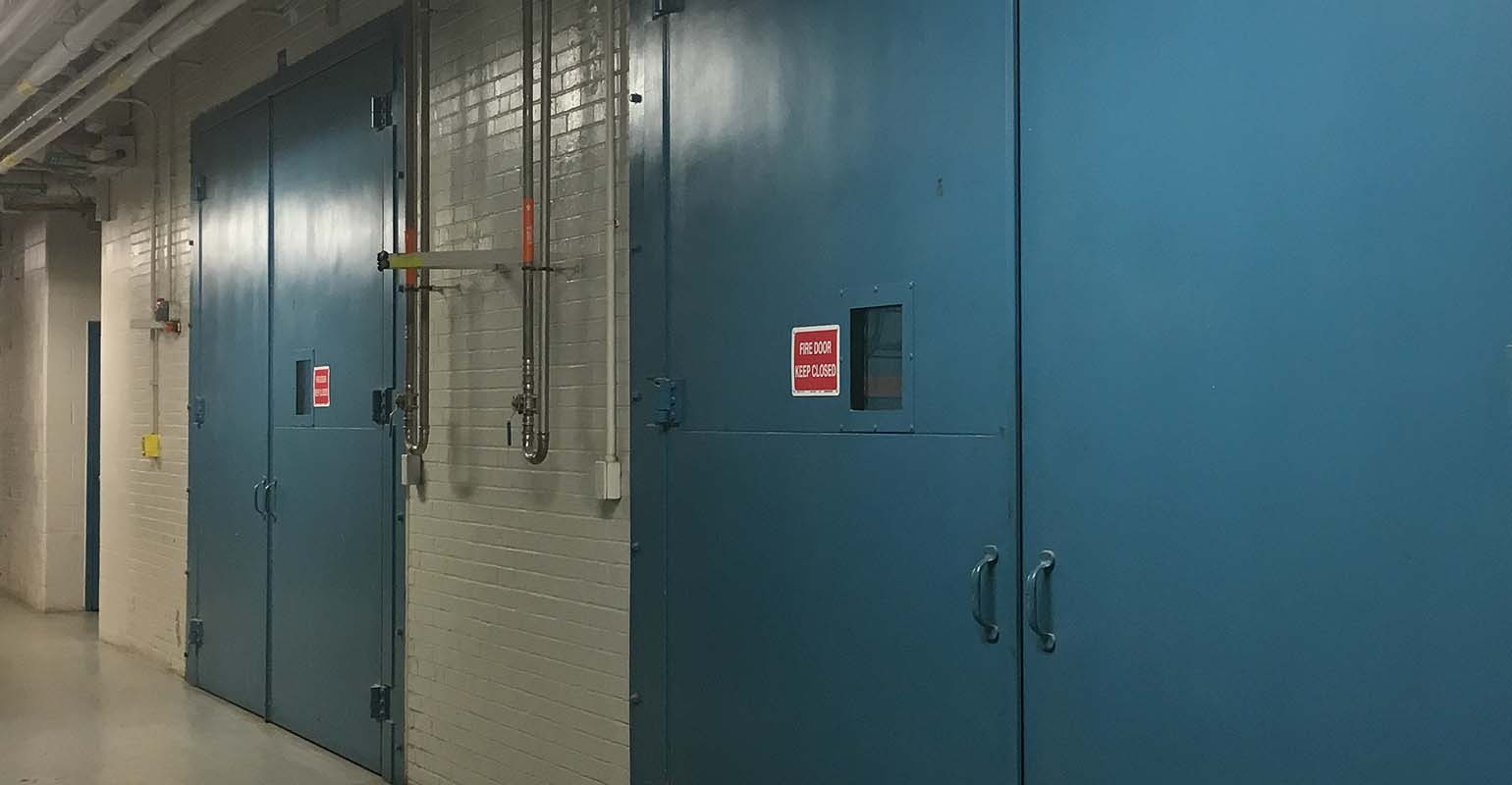
Key Features
Engineered blast protection for critical applications
Multi-Level Blast Protection (1-50+ PSI)
Our blast resistant door portfolio spans the complete protection spectrum. Low-range doors (1-3 PSI) suit government offices. Mid-range (4-5 PSI) serves petrochemical facilities. High-range (6-50+ PSI) protects military installations.
- Complete PSI range coverage
- Application-specific engineering
- Optimized cost-performance
UFC 4-010-01 DoD Compliance
Full compliance with U.S. Department of Defense Minimum Antiterrorism Standards for Buildings. Mandatory for all DoD-owned, leased, and controlled facilities worldwide.
- Government project qualified
- Full documentation package
- Streamlined procurement
ASTM F2927 Shock Tube Verified
Third-party testing per ASTM F2927 using actual shock tube or arena blast testing. This rigorous protocol generates real explosive loading conditions to verify door performance.
- Third-party verified
- Real blast conditions
- Performance transparency
Category I/II/III Response Options
Performance response categories per ASTM F2247. Category I for critical egress, Category II for petrochemical (PIP STC01018), Category III for cost-effective protection.
- Tailored to application
- Budget optimization
- Code-compliant options
Military-Grade Steel Construction
Door leaves constructed from heavy-gauge cold-rolled steel with engineered internal ribbing. High-protection applications utilize AR-500 ballistic steel with exceptional tensile strength.
- Superior tensile strength
- Blast energy absorption
- Corrosion resistant
Multi-Function Integration
Combine blast protection with ballistic resistance (UL 752), acoustic attenuation (STC 45-55), fire rating (up to 3-hour), and electromagnetic shielding in a single assembly.
- Combined protections
- Reduced complexity
- Lower total cost
Complete Door System Supply
Complete tested systems including engineered frame, blast-rated hinges, multi-point locking mechanisms, and seals. All components tested together as an integrated assembly.
- Factory-tested assembly
- Matched components
- Installation support
Custom Engineering & Large Format
Our technical team develops solutions for oversized openings, non-standard pressure requirements, and unique constraints. Finite element analysis (FEA) validates custom designs.
- Non-standard sizes
- FEA validation
- Engineering documentation
Note: Blast resistant doors represent a specialized security category requiring precise engineering matched to threat assessment. Our engineering team provides consultation to match door specifications to your project's blast loading requirements, ensuring appropriate protection without over-specification.
Blast Protection Ratings
Understanding PSI ratings and performance categories for proper specification
Protection Levels by PSI Range
10-30 PSF equivalent
Entry-level blast protection for facilities with lower threat profiles. Suitable for standard government buildings, transportation hubs, and commercial facilities requiring basic blast mitigation.
Typical Applications
- • Government office buildings
- • Airport terminals
- • Corporate headquarters
- • Convention centers
Construction Features
- • 14-16 gauge steel face sheets
- • Standard mineral core
- • Heavy-duty commercial hinges
- • Basic multi-point lock
40-50 PSF equivalent
Intermediate protection addressing elevated threat scenarios. The petrochemical industry standard for control rooms and manned facilities where PIP STC01018 applies.
Typical Applications
- • Petrochemical control rooms
- • Refinery personnel areas
- • Embassy security zones
- • Critical infrastructure
Construction Features
- • 12-14 gauge steel face sheets
- • High-density mineral core
- • Blast-rated hinges
- • 3-point locking minimum
60-500+ PSF equivalent
Maximum protection for high-threat environments. Military bases, ammunition storage facilities, explosive handling areas, and specialized defense installations.
Typical Applications
- • Military installations
- • Ammunition depots
- • Weapons storage
- • Nuclear facilities
Construction Features
- • Multiple steel layers or AR-500 plate
- • Engineered ribbed core
- • Continuous blast hinges
- • 5+ point locking with blast latches
ASTM F2247 Performance Response Categories
Beyond PSI rating, blast doors are classified by their post-blast condition. The appropriate category depends on operational requirements and personnel safety considerations.
| Category | Response | Post-Blast Condition | Operability | Recommended For |
|---|---|---|---|---|
| Category I | Elastic Response | No permanent deformation | 100% Operational | Critical egress routes, security checkpoints |
| Category II | Controlled Plastic | Measurable deformation, ≤2.0° edge rotation | Maintained | Petrochemical standard (PIP STC01018), personnel areas |
| Category III | Significant Plastic | Non-catastrophic failure, ≤8° edge rotation | Lost | Unmanned areas, equipment rooms, most DoD applications |
| Category IV | Catastrophic Failure | Door may detach, severe deformation | Failed | Not recommended - fails to provide protection |
Selecting the Right Blast Rating
Determine Threat Level
Work with security consultants or reference UFC 4-010-01 threat assessment guidelines.
Calculate Blast Load
Blast pressure depends on charge weight and standoff distance.
Select Category
Category II for personnel areas, Category III for unmanned spaces.
Consider Impulse
Complete specs include peak pressure, duration, and impulse.
Understanding Pressure vs. Total Load
Door size significantly affects total load even at identical PSI ratings:
Larger doors require proportionally stronger construction to achieve the same PSI rating.
Construction & Materials
Engineering the blast resistant door system from frame to finish
Door Leaf Construction
Standard Steel Blast Door
1-5 PSI Range
Standard construction for government buildings, commercial applications, and moderate protection requirements. Most common configuration for UFC 4-010-01 Low Level of Protection.
Face Skins
14-16 gauge (low range), 12-14 gauge (mid range)
Hot-dip galvanized or phosphate pretreatment
Core
High-density mineral fiber (120-200 kg/m³)
Provides mass for inertial resistance
Heavy-Duty Steel Blast Door
6-20 PSI Range
Armor Plate Blast Door (AR-500)
20-50+ PSI Range
Frame Systems
Welded Steel Frame
New construction, all PSI ratings
- Material: 12-gauge min (10-gauge for 5+ PSI)
- Depth: 4-3/4" to 8"+
- Anchorage: Embedded in concrete or welded to steel
Recommended for new construction
Heavy-Duty Blast Frame
Mid and high-range PSI ratings
- Material: 10-gauge or heavier
- Depth: 6" to 10"
- Anchorage: Engineered anchor system
Required for high-PSI applications
Retrofit Frame
Existing construction, limited ratings
- Material: 14-gauge with reinforcement
- Depth: 4-3/4" to 6"
- Anchorage: Expansion anchors
Limited to 1-3 PSI applications
Hardware Systems
| Component | Low-Range (1-3 PSI) | Mid-Range (4-5 PSI) | High-Range (6+ PSI) |
|---|---|---|---|
| Hinges | 3× heavy-duty ball bearing, 4-1/2" × 4-1/2" | 4× blast-rated or continuous hinge | Continuous blast hinge or 5+ pivot hinges |
| Locking System | Multi-point lock (2-point minimum) | 3-point min with reinforced strikes | 5+ point with proprietary blast latches |
| Seals | Compression gaskets (EPDM/neoprene) + optional intumescent for fire rating | ||
Critical: Hinges and locks are common failure points under blast loading. Must be rated for calculated blast load. Lock disengagement under dynamic loading voids protection—specify locks tested as part of complete door assembly.
Technical Specifications
Blast resistant door engineering parameters and dimensional data
Standard Dimensions
| Dimension | Single Door | Double Door |
|---|---|---|
| Width (Min) | 762mm (30") | 1524mm (60") |
| Width (Standard) | 914mm (36") | 1828mm (72") |
| Width (Max) | 1524mm (60") | 3048mm (120") |
| Height (Standard) | 2134mm (84") | 2438mm (96") |
| Height (Max) | 3048mm (120") | 3048mm (120") |
| Thickness | 44mm (1-3 PSI) | 57-70mm (4-5 PSI) | 76mm+ (6+ PSI) | |
Blast Loading Parameters
Optional Features
Vision Panel
Blast-rated glazing per ASTM F1642
Up to 100 sq in standard, larger with engineering. Laminated security glass or polycarbonate.
Ballistic Rating
UL 752 Levels 1-8
Combined blast and bullet resistance. Increases door weight significantly.
Fire Rating
Up to 3-hour (180 min)
Combined blast and fire resistance. Requires intumescent seals and modified core.
Acoustic Rating
STC 40-55
Sound attenuation capability. Standard blast door construction typically achieves STC 40+.
EMI Shielding
RF/EMI attenuation
Electromagnetic shielding for sensitive facilities. Specialized construction required.
Stainless Steel
304 or 316 SS face sheets
Corrosive environments, pharmaceutical, food processing applications.
Approximate Door Weights
| Rating | Single Door | Double Door |
|---|---|---|
| 1-3 PSI | 150-250 lbs (68-113 kg) | 300-500 lbs (136-227 kg) |
| 4-5 PSI | 300-450 lbs (136-204 kg) | 600-900 lbs (272-408 kg) |
| 6-15 PSI | 450-700 lbs (204-318 kg) | 900-1400 lbs (408-635 kg) |
| 15+ PSI | 700+ lbs (318+ kg) | 1400+ lbs (635+ kg) |
Supporting structure must be designed for door weight plus blast loading. Weights vary based on exact construction.
Applications
Blast resistant door solutions across industries and facility types
Military bases worldwide require blast resistant doors to protect personnel and assets. From ammunition storage magazines requiring extreme protection (20-50+ PSI) to administrative buildings with moderate requirements (3-5 PSI).
Specific Applications
Refineries, chemical plants, and natural gas processing facilities operate with inherent explosion risks. Category II doors per PIP STC01018 prioritize post-blast operability for personnel evacuation.
Specific Applications
U.S. embassies, consulates, federal courthouses, and high-security government facilities require blast protection against VBIEDs and terrorist threats. Category III provides cost-effective compliance.
Specific Applications
Power plants, water treatment facilities, telecommunications hubs, and transportation nodes. These facilities often combine blast protection with ballistic resistance and access control.
Specific Applications
Major banks, securities exchanges, and financial data centers require blast protection for physical security and business continuity. Category II maintains operational capability post-blast.
Specific Applications
Biosafety laboratories, pharmaceutical manufacturing, and hospital critical infrastructure. These applications often combine blast resistance with biological containment or cleanroom requirements.
Specific Applications
Quick Reference by Building Type
| Building Type | Typical PSI | Category | Primary Standard |
|---|---|---|---|
| High-Security Government | 3-5 PSI | Category III | UFC 4-010-01 |
| Petrochemical Control Rooms | 4-8 PSI | Category II | PIP STC01018 |
| Military Storage | 10-50+ PSI | Varies | UFC 4-010-01 |
| Critical Infrastructure | 2-4 PSI | Category II/III | Sector-specific |
| Data Centers | 2-3 PSI | Category II | Customer-specific |
Certifications & Standards
International blast door standards and testing protocols
Primary Standards
DoD Minimum Antiterrorism Standards for Buildings
The foundational standard for blast protection in U.S. government and military facilities. Establishes minimum standoff distances, progressive collapse requirements, and blast door specifications based on facility security level.
Key Requirements
- • Establishes design basis threat (DBT) criteria
- • Defines standoff distances and building setbacks
- • Specifies door and window protection levels
- • Addresses progressive collapse resistance
Our Compliance
Full compliance with UFC 4-010-01 requirements. Engineering documentation supports government procurement and approval processes.
Standard Test Method for Door Systems Subject to Airblast Loading
The definitive test standard for blast door performance verification. Uses actual explosive charges or shock tube apparatus to generate realistic blast loading conditions.
Key Requirements
- • Live blast testing with specified charge weight
- • Full-scale door assembly testing
- • Performance grading based on post-blast condition
- • Third-party test facility certification
Our Compliance
Doors tested by accredited third-party laboratories per ASTM F2927 protocol. Test reports available upon request.
Standard Test Method for Metal Doors Used in Blast Resistant Applications
Alternative test method using hydraulic loading to simulate blast pressure effects. Establishes ultimate static load capacity and categorizes door response (Category I through IV).
Our Compliance
Design validation through ASTM F2247 equivalent static testing. Category I, II, and III doors available.
Standard Test Method for Glazing and Glazing Systems Subject to Airblast Loading
Testing protocol for blast-rated glass and glazing systems used in vision panels. Critical for doors with vision lites requiring blast protection.
Our Compliance
Vision panels tested per ASTM F1642. Glazing matched to door blast rating.
Industry Standards
Blast Resistant Building Design Criteria
Industry standard for blast resistant buildings in petrochemical facilities. Emphasizes Category II operability for manned spaces.
CompliantEquipment for Explosive Atmospheres
European regulatory framework for equipment in potentially explosive atmospheres. Addresses explosion prevention.
AvailableGuideline for Blast Resistant Steel Doors
Steel Door Institute guideline providing standard specification language for blast resistant steel doors.
CompliantAdditional Certifications
| Certification | Description | Application | Status |
|---|---|---|---|
| GSA-TS01-2003 | U.S. General Services Administration technical specification | Federal civilian buildings | Compliant |
| UL 752 | Ballistic resistance standard for combined blast/bullet resistant doors | Multi-threat protection | Levels 1-8 |
| ISO 9001:2015 | Quality management system certification | Manufacturing quality | Certified |
| EN 1522/EN 1523 | European bullet resistance classification | Combined blast/ballistic for EU | Available |
Available Documentation
Test Reports
Third-party ASTM F2927/F2247 test reports
Engineering Analysis
FEA analysis and load calculations
Shop Drawings
Detailed fabrication drawings with anchorage
Installation Instructions
Step-by-step installation procedures
Certification Statements
Manufacturer certification of compliance
Maintenance Guides
Recommended inspection procedures
Why Choose Euwoo
Engineering excellence and supply chain advantages for your blast door project
Full Spectrum Blast Protection (1-50+ PSI)
Unlike manufacturers focused on specific market segments, Euwoo offers blast resistant doors across the complete protection spectrum. Single-source procurement for projects with mixed protection requirements.
- Low, mid, and high-range options
- Single-source capability
- Cost optimization guidance
International Multi-Standard Compliance
Our blast doors meet requirements across multiple international standards frameworks. UFC, ASTM, PIP, ATEX certified for global deployment capability.
- UFC, ASTM, PIP, ATEX certified
- International project support
- Simplified global procurement
Complete Tested Door Systems
We supply blast resistant doors as complete, tested systems—not component parts. Each system includes engineered door leaf, matched frame, blast-rated hardware.
- Factory-tested assemblies
- Matched components
- Complete documentation
Factory-Direct Competitive Pricing
As a manufacturer with direct export capability, Euwoo offers pricing typically 20-35% below comparable specifications from Western manufacturers.
- 20-35% cost advantage
- Vertically integrated manufacturing
- Volume pricing available
Custom Engineering & Technical Support
Our technical team provides application consultation, blast loading analysis, and custom design development. FEA validates designs before fabrication.
- FEA-validated designs
- Non-standard configurations
- Ongoing technical support
Proven International Project Experience
Euwoo has supplied blast resistant doors to projects across 40+ countries, including government facilities, petrochemical installations, and critical infrastructure.
- 40+ countries served
- Diverse project experience
- Reference projects available
Competitive Advantages
| Factor | Euwoo | Typical Competitor |
|---|---|---|
| PSI Range Coverage | 1-50+ PSI full spectrum | Focused on specific range (often 1-10 PSI) |
| Standard Compliance | UFC + ASTM + PIP + ATEX | Often limited to regional standards |
| System Completeness | Complete tested assemblies | May require separate hardware sourcing |
| Pricing | Factory-direct competitive | Distributor/reseller markups |
| Custom Engineering | In-house FEA and design | May require external engineering |
| Lead Time | 30-120 days depending on spec | Often 12-20 weeks for custom |
Quality Commitment
ISO 9001:2015
Certified QMS
Third-Party Testing
Accredited labs
Material Traceability
Mill certifications
Pre-Shipment Inspection
Factory inspection available
Frequently Asked Questions
Expert answers to common blast resistant door questions
Have More Questions?
Our technical team provides application consultation for blast resistant door projects.
Contact Technical Support